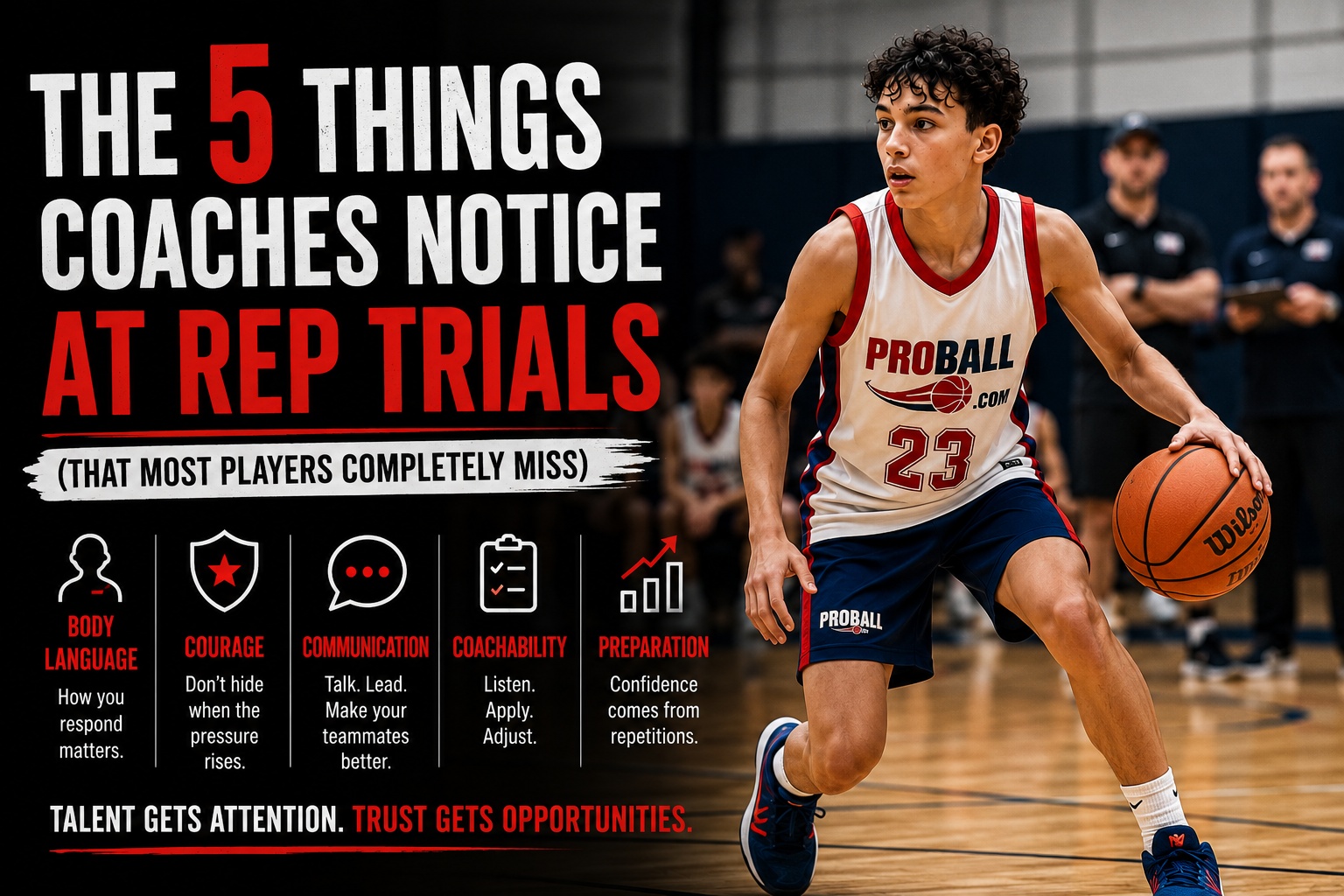
Most players walk into rep trials believing they’re being judged on one thing. Basketball skill. They think coaches are counting made shots. Tracking points. Watching who scores the most. They’re not.
Of course skill matters. Nobody is pretending otherwise. But after years of coaching youth basketball, one thing becomes obvious...
The athletes who get selected are often not the athletes most people expected. Because coaches are watching far more than points. They’re watching behaviour. Attitude. Decision-making. Response to pressure. Body language. Communication. Coachability.
The truth is that rep trials are often less about showing coaches what you can do and more about showing coaches who you are when things get difficult.
Let’s look at the five things coaches are actually paying attention to.
1. Body Language: How You Respond Matters
This might be the fastest way to stand out. Or the fastest way to disappear.
Every athlete makes mistakes during trials. Every athlete misses shots. Turns the ball over. Gets beaten defensively. That isn’t what coaches are evaluating.
What coaches notice is the reaction. Does the athlete drop their head? Throw their hands in the air? Blame a teammate? Stop competing? Or do they sprint back on defence? Stay engaged? Move on to the next play?
The difference is huge. One athlete shows frustration. The other shows resilience.
When coaches are choosing between athletes with similar skill levels, resilience wins more often than people realise.
Because games are hard.
Seasons are long.
Coaches need athletes who can handle adversity.
2. Courage: Don’t Hide
Pressure reveals habits. Many players become invisible when nerves arrive. They stop asking for the ball. They avoid contact. They drift to corners. They hope somebody else takes responsibility.
The athletes who stand out aren’t always fearless. They’re simply willing to stay involved. They continue cutting. Defending. Communicating. Competing. Trying. Even after mistakes. Even after failures. Even after difficult possessions.
Coaches aren’t looking for perfection. They’re looking for courage. Because courage can be developed. Hiding becomes a habit. So does competing.
3. Communication: Quiet Players Often Get Missed
Communication is one of the most underrated skills in youth basketball.
Many athletes believe coaches only notice what happens when they have the ball.
The reality is that coaches spend significant time watching players without the ball.
Can they communicate defensively?
Can they help teammates?
Can they organise?
Can they lead?
Can they create energy?
A player who talks constantly helps everyone around them improve.
A player who stays silent becomes much harder to evaluate.
Talking alone won’t earn selection. But silence rarely helps.
The best teams communicate. The best defenders communicate. The best leaders communicate. And coaches notice.
4. Coachability: Listen. Apply. Adjust.
This is one of the biggest selection factors that parents rarely discuss.
Imagine two athletes.
The coach gives both players the same piece of feedback.
One athlete nods.
Then repeats the same mistake five minutes later.
The other athlete immediately attempts to make the adjustment.
Who do you think coaches trust more?
Coachability isn’t agreeing with everything.
It’s showing a willingness to learn.
To listen.
To experiment.
To improve.
No coach expects perfection.
Every coach wants growth.
Athletes who can absorb information and apply it quickly often move ahead of more talented players who refuse to adapt.
Talent opens doors.
Coachability keeps them open.
5. Preparation: Confidence Comes From Repetitions
This is where many athletes misunderstand confidence.
Confidence isn’t a personality trait.
Confidence is often evidence.
Evidence that you’ve prepared.
Evidence that you’ve practiced.
Evidence that you’ve done the work.
The athletes who look calm during trials usually aren’t magically confident.
They’re prepared.
They’ve already spent time:
- Handling the ball
- Shooting
- Defending
- Conditioning
- Competing
When pressure arrives, they aren’t seeing these situations for the first time.
They’ve already experienced them hundreds of times.
Preparation creates confidence.
Repetition creates trust.
Trust creates opportunity.
What Most Players Get Wrong About Rep Trials
Most athletes spend months preparing their skills.
Few spend time preparing their behaviours.
That’s a mistake.
Because every rep coach sees talented athletes.
What they’re searching for is the athlete who combines talent with trustworthiness.
The athlete who:
- Responds well to mistakes
- Competes through adversity
- Communicates consistently
- Accepts coaching
- Arrives prepared
Those athletes make coaches feel comfortable.
And comfort often becomes opportunity.
The Bigger Lesson Beyond Basketball
What’s fascinating is that these same five traits matter almost everywhere.
At school.
At work.
In leadership.
In relationships.
People trust those who stay positive under pressure.
People trust those who communicate.
People trust those who listen and adapt.
People trust those who prepare.
Rep basketball is simply one place where those lessons become visible.
The athletes who learn them early gain an advantage that extends far beyond sport.
Final Takeaway
Most players think rep trials are about basketball. The best coaches know they’re also about character. Body language. Courage. Communication. Coachability. Preparation.
Those five things often separate athletes who get noticed from athletes who get overlooked.
Skill matters. But when coaches are choosing between similar players, they’re usually asking one simple question:
Can I trust this athlete when the game gets hard?
The players who answer “yes” with their actions usually earn the opportunity.
Want To Be Better Prepared For Rep Trials?
At ProBall, we help young athletes build the habits coaches notice. Confidence. Communication. Coachability. Preparation. Consistency. Our Train Every Day program gives athletes more opportunities to develop the skills and behaviours that help them perform when trials arrive. Book a free trial and experience the difference for yourself.
Book a Free Trial