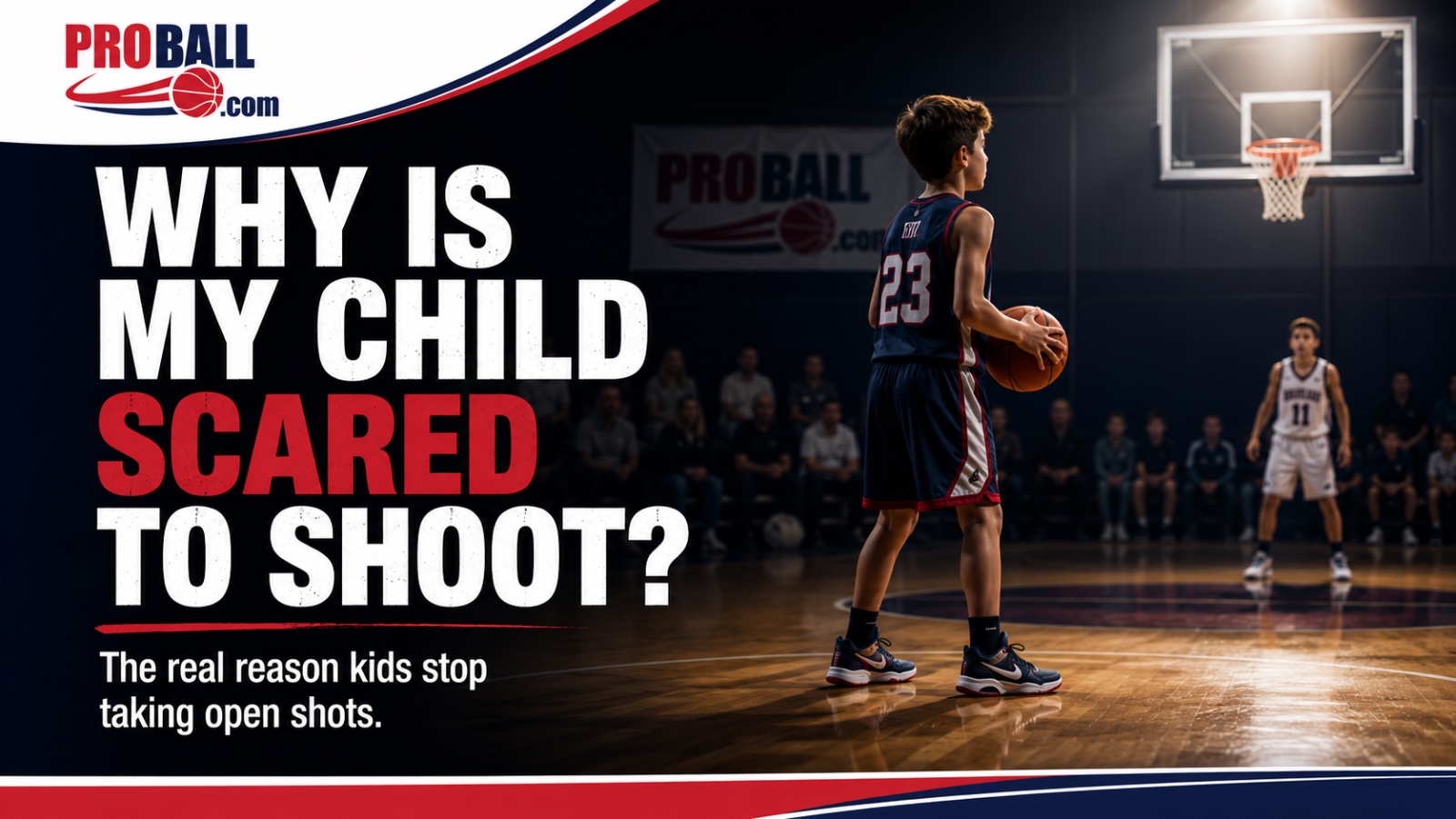
Every weekend, somewhere in Australia, the same moment plays out. A child catches the ball. They’re standing all alone. The basket is right in front of them. Parents on the sideline are already thinking the same thing.“Shoot it!”
Instead, the child hesitates. They glance at the basket, look at a teammate.... Then they pass the ball away. A few seconds later, the opportunity is gone.
On the drive home, most parents arrive at the same conclusion. “They just need to practise their shooting.” Sometimes that’s true.
But after coaching hundreds of young basketball players over the years, we’ve found something surprising.
Many children don’t stop shooting because they can’t shoot, but because they’re scared. Not scared of the basketball, or of missing. They’re scared of everything they think comes after the miss. Once you understand that, everything changes.
The biggest myth about confidence
Parents often believe confidence comes first. “If my child becomes more confident, they’ll start shooting.” In reality, confidence usually works the other way around.
Children become confident because they’ve had enough positive experiences. Confidence isn’t something they find. It’s something they build.
Think about riding a bike. Nobody wakes up confident enough to ride without training wheels. Confidence appears after wobbling, falling, getting back up and eventually realising “I can do this.”
Basketball works exactly the same way. The problem is that many children never give themselves enough chances to build that confidence because fear stops them before they even take the shot.
Fear doesn’t always look like fear
When adults picture fear, they imagine a child looking nervous. Basketball fear is much harder to spot.
Sometimes it looks like:
- Passing to someone who’s in a worse position.
- Holding the ball for too long.
- Dribbling sideways instead of attacking.
- Looking for someone else to make the play.
- Smiling after a mistake, even though they’re disappointed.
To a parent, it might look like a child who lacks confidence. To a coach, it often looks like a child trying to avoid making a mistake. That’s an important difference. They’re not trying to fail. They’re trying to stay safe.
Why kids become scared to shoot
There isn’t one reason. Usually it’s a combination of several small experiences that slowly teach a child that shooting feels risky.
1. They’re scared of making a mistake
This is the biggest reason. Children notice everything. They notice their teammates watching, parents reacting, coaches giving instructions. Even when nobody says anything, children often imagine everyone is judging every shot they take.
To an adult, missing a shot is just part of basketball. To a child, it can feel like everyone just watched them fail. If avoiding embarrassment feels safer than taking the shot, passing suddenly becomes the easier option.
2. One comment can stay with them for months
Children remember emotional moments far longer than adults realise. Imagine this happens. A child shoots. They miss. After the game someone says, “you should’ve passed.”
Maybe it was a parent, or a coach, or another player. Maybe it wasn’t even said in an angry way. It doesn’t matter. The brain remembers.
Next game.Same situation. The child catches the ball. Without even thinking, their brain whispers, “don’t let that happen again.” So they pass. And he wasn't doing it because passing was the better basketball decision. Because passing feels emotionally safer.
3. They’ve started believing they’re “not a shooter”
Children create identities very quickly.
“I’m fast.”
“I’m good at defence.”
“I’m not good at shooting.”
The problem is that these labels often come from very little evidence. Maybe they missed a few shots, or because another child scores more often. Perhaps an older sibling is a better shooter.
Slowly, they stop seeing themselves as someone who should take shots. Once that belief takes hold, confidence drops even further.
4. They care about their teammates
This one surprises a lot of parents. The children who hesitate the most are often the ones who care the most. They don’t want to cost the team points, let everyone down, or be the reason their team loses.
That’s actually a wonderful quality. It shows empathy. The challenge is helping them understand that good teammates don’t avoid responsibility. They embrace it.
5. Practice and games feel completely different
Many parents say, “but they shoot great at home.” Of course they do. There’s no defender. No scoreboard. No crowd. No pressure.
A game changes everything. The heart beats faster. Your brain processes more information, decisions have to happen in less than a second.
That’s why simply taking hundreds of relaxed shots isn’t always enough. Children also need opportunities to make decisions under realistic pressure.
6. They’re thinking too much
Watch an experienced shooter. Catch. Shoot. The decision happens almost instantly.
Now watch a child who’s struggling with confidence. Catch. Pause. Think. Should I shoot? Should I pass? What if I miss?
TOO LATE!
The defender arrives. The opportunity disappears. Confidence isn’t always about courage. Sometimes it’s about reducing hesitation.
What parents accidentally make worse
Parents naturally want to help. Unfortunately, some of the most common phrases create even more pressure. Imagine your child catches the ball. From the sideline they hear, “shoot!”
Now imagine they don’t. On the drive home they hear, “why didn’t you shoot?”
Your child already knows they passed up the opportunity. They don’t need another reminder.
Instead, ask questions that help them reflect.
“What were you thinking in that moment?”
“Did you feel open?”
“Were you worried about something?”
Those conversations build understanding instead of pressure.
What confident parents do differently
Parents who help build confidence usually focus on effort instead of outcomes. Instead of saying, "did you score?”, they ask, "did you play bravely today?”; Instead of saying, "you should’ve made that shot.” They say, "I loved that you were willing to take it.”
Children don’t need perfection. They need permission. Permission to miss. Permission to learn. Permission to keep trying. Like Kobe. When he was a teenager, his dad told him he loved him no matter what. That unleash a whole different player in Kobe. He now knew his dad would love him even if he failed. Imagine how freely he must have played after that. No wonder he got 5 rings.
What coaches can do
The best coaches understand something important. Children don’t become confident because every shot goes in. They become confident because they know one missed shot won’t change how their coach sees them.
That’s why great coaching environments celebrate:
- Good decisions.
- Aggressive play.
- Learning.
- Resilience.
- Effort.
When children know mistakes are part of learning, they become much more willing to take opportunities.
What players can do
Confidence isn’t built overnight. It’s built one decision at a time. If your child is struggling to shoot during games, encourage them to focus on one simple goal. Take one brave shot. Not ten. Not every possession. Just one. Next game, take two.
Small wins build momentum. Momentum builds confidence. Confidence changes behaviour.
How we approach confidence at ProBall
At ProBall, we don’t believe confidence starts with positive thinking. We believe it starts with experience. That’s why our training sessions are designed to give players repeated opportunities to make decisions in realistic basketball situations.
Players are encouraged to attack, make mistakes, learn and try again. Our coaches don’t expect perfection. They expect courage. Over time something remarkable happens. Players who once avoided the ball begin asking for it. Some who always passed start attacking the basket. The kid who never wanted the last shot begin taking responsibility.
And it wasn't because someone told them to feel confident, but they’d earned that confidence through repetition and experience.
What you can do this week
If your child is scared to shoot, don’t make the goal “score more points.” Make the goal “take one open shot.” After the game, celebrate the courage to take it. Even if it misses. Especially if it misses.
Every confident basketball player has missed thousands of shots. The difference is they kept taking the next one.
One brave shot today might become the beginning of a completely different player six months from now.
And that’s worth far more than one basket.
Ready to help your child build real confidence?
Confidence doesn’t come from standing on the sideline telling kids to believe in themselves. It comes from great coaching, positive experiences and an environment where mistakes are part of learning. If you’d like your child to experience that for themselves, join ProBall for a 4-week free trial and see how confidence grows when kids are encouraged to play without fear.
Book a Free Trial