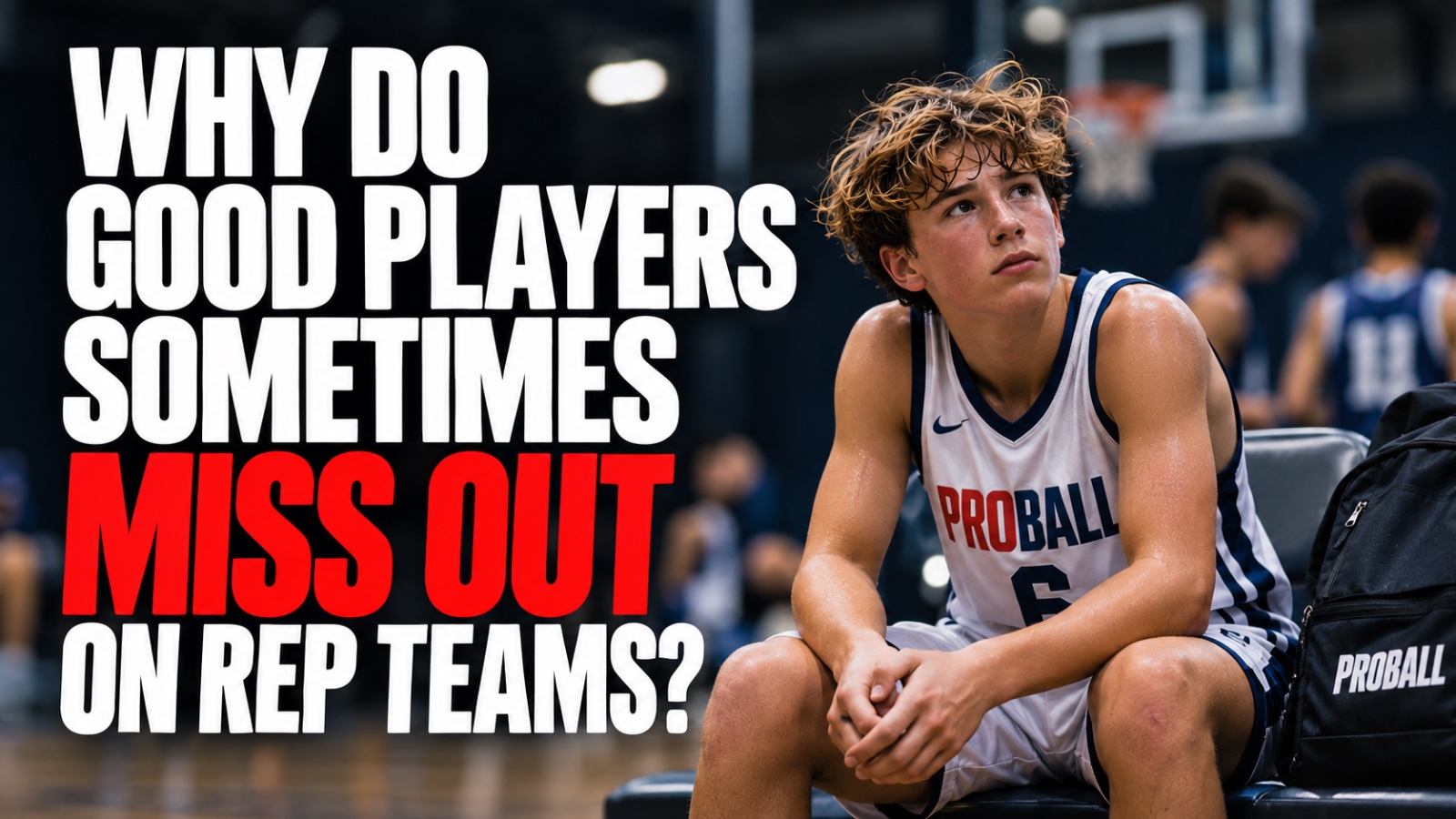
Every year around this time, representative basketball teams are announced across Sydney. Some kids get the news they’ve been hoping for. They’re excited, their parents are excited, and suddenly they’re looking forward to a new season of basketball. Others open that same email and don’t see their name.
For some of those children, it’s absolutely heartbreaking. They’ve been training for months, attending trials, competing against other players and imagining what it would feel like to wear that representative jersey. Maybe they’ve watched their friends get selected. Maybe they were convinced they’d done enough. Now they’re wondering what went wrong, and their parents are wondering what to say.
Good basketball players miss out on representative teams every single year. Some will make it the following season. Some will take longer. Others will find a different pathway through basketball. An U12 representative team selection tells us something about where a child is right now, but very little about the basketball player they’ll become.
Why Do Good Players Sometimes Miss Out?
Representative basketball trials aren’t simply about identifying the best individual players. Coaches are trying to build a team, which means they’re considering positions, playing styles, defensive abilities, decision-making, physical development and how players might work together. A child can be an excellent basketball player and still not be the right fit for what a particular coach is looking for.
Imagine a coach has several talented guards competing for a limited number of positions. All of them might be capable of playing representative basketball, but there aren’t enough places available. One player might be a better shooter, another might be stronger defensively, and another might communicate better or fit a particular role the coach needs. The coach has to make a decision based on what they believe their team needs, even when several players deserve an opportunity.
And yes, sometimes coaches get selections wrong. They’re human. They’re making decisions based on a limited number of trials, and they can’t possibly know how every child will develop over the next few years. Sometimes a player has a poor trial. Sometimes nerves affect their performance. Sometimes their strengths don’t stand out in the activities being used. That doesn’t automatically mean the selection process was unfair, but we should be careful about treating the outcome as a final assessment of a child’s ability.
At 11 Years Old, Children Are Developing at Completely Different Speeds
Two children can be the same age and be at very different stages of physical development. One might already be tall, strong and comfortable playing through contact. Another might be smaller, less physically developed and still learning how to use their body. At U12 level, those differences can be enormous, particularly when children are competing for limited positions on representative teams.
A physically advanced child might dominate games because they’re stronger and faster than their opponents. That doesn’t mean they aren’t talented, but physical advantages can make it difficult to separate current performance from long-term potential. Meanwhile, another player might have excellent basketball instincts, good technique and a strong understanding of the game, but struggle against bigger or stronger opponents. Give those children another three or four years and the picture could look completely different.
The best player at 11 isn’t necessarily going to be the best player at 15. And the best player at 15 isn’t necessarily going to be the best player at 20. Young athletes develop at different rates. Some improve quickly, while others take longer to find their confidence, develop physically or understand the game. Judging a child’s future based on one representative selection doesn’t make much sense when there’s still so much growing and learning ahead of them.
How Many U12 Representative Players Actually Become Professionals?
How many professional basketball players can you name who made an U12 representative team? Probably not many. Plenty of professional players went through junior representative programs, but we rarely know the details of their earliest selections. We remember what they became, not every team they made or missed along the way.
Plenty of children also make representative teams at U12 and never play basketball professionally. That’s completely normal. Some eventually prefer other sports, some lose interest, some stop enjoying the competition, and others continue playing basketball recreationally for years. Making a representative team doesn’t guarantee a professional career, and missing one doesn’t eliminate the possibility. There are far too many years of development between those two points for either conclusion to make sense.
And why are we even discussing professional basketball careers when we’re talking about 11-year-old children? Most of them just want to play. They want to improve, spend time with their friends, compete and enjoy being part of something. Those experiences shouldn’t suddenly become less valuable because their name wasn’t on a representative team list.
The Biggest Risk Isn’t Missing the Team. It’s What Happens Afterwards.
This is the part that concerns us most as coaches. A child misses out on a representative team, and their relationship with basketball starts to change. They stop asking to go to training, become quieter around their teammates and start comparing themselves with friends who were selected. Sometimes they decide they’re simply not good enough. Occasionally, they want to give up basketball altogether.
A child who loved basketball a few weeks ago is now considering quitting because of one selection decision. That’s a much bigger loss than missing out on a representative jersey. Of course they’re disappointed. They worked hard for something and didn’t get the result they wanted. Let them feel that disappointment, but be careful about how much meaning gets attached to it. One unsuccessful trial shouldn’t become the reason a child starts questioning everything they’ve achieved.
Not making a team is something that happened to your child. It doesn’t change who they are or what they’re capable of learning. How parents and coaches respond in the days following selection can influence whether a child sees the experience as a permanent failure or another part of learning to compete.
What Should Parents Do When Their Child Doesn’t Make the Rep Team?
First, let them be disappointed. You don’t need to immediately explain why the coaches were wrong, promise they’ll make it next year or start planning another five training sessions. Sometimes your child just needs to hear, “I know how much you wanted this. I understand why you’re upset.” That’s enough for the first conversation. Give them time to process what happened before turning it into another basketball lesson.
Don’t Immediately Blame the Coaches
We understand the temptation. You’ve watched your child train, you’ve seen their improvement, and you might genuinely believe they deserved a place. But telling your child that the selectors don’t know what they’re doing can create another problem. They start looking for someone to blame instead of thinking about what they can learn from the experience.
Sometimes selection decisions are questionable. Sometimes they’re perfectly reasonable. Often, parents simply don’t have access to everything the coaches considered. You don’t need to agree with the decision to help your child respond constructively. You can acknowledge that the result hurts without turning the coaches or the selected players into the enemy.
Don’t Compare Them With the Players Who Made It
“But you’re better than that kid.” Even if you believe it, what does that achieve? Your child doesn’t become a better basketball player by comparing themselves with someone who was selected, and the child who made the team hasn’t done anything wrong. They’re another young athlete who worked towards an opportunity and deserves to enjoy their achievement.
Instead of focusing on who got picked, help your child focus on what they can improve. There’s always something, whether that’s their ball handling, defensive positioning, decision-making or ability to compete against stronger opponents. Those are things they can actually influence. Another child’s selection isn’t.
Ask for Feedback, Not an Argument
Once the initial disappointment has passed, consider asking the association or coaching staff for constructive feedback, if that’s something they offer. You’re trying to understand what your child could work on. Perhaps they need to improve their defensive positioning, decision-making, ball handling under pressure or ability to finish against contact. Maybe they need more experience playing against stronger competition.
Specific feedback gives a young athlete something useful to work towards. “You’re not good enough” isn’t helpful, but “Let’s improve how you defend quicker players” gives them a direction. Even if detailed feedback isn’t available, a good coach can help identify areas for development and create a realistic plan for the months ahead.
What Should Your Child Do Next?
If your child still loves basketball, our advice is simple. Keep playing. Keep training. Keep enjoying it. They don’t need to spend the next 12 months trying to prove a particular coach wrong. They need to keep developing their skills, learning to make decisions during games, improving defensively and getting comfortable competing against different opponents.
Basketball development isn’t limited to representative teams. Children can improve enormously through regular academy training, domestic competitions, school basketball, playing with friends and challenging themselves against stronger players. They need opportunities to practise, make mistakes, receive feedback and apply what they’re learning in games.
A child who misses out on representative basketball but continues training consistently can sometimes develop faster than a selected player who becomes comfortable with their position. Both players still have to put in the work. Getting selected doesn’t automatically make someone better, and missing out doesn’t stop someone from improving.
Parents, Be Careful Not to Make This Bigger Than It Needs to Be
Sometimes children recover from disappointment faster than their parents. A child might be upset on Friday, play basketball with friends on Saturday and be ready to move forward by Monday. Meanwhile, Mum and Dad are still discussing the selections three weeks later. We understand why. Parents invest time, money and energy into their children’s sport. They drive to training, organise weekends and watch their children work towards something important. Of course they care.
But our reactions can influence how children understand their own experiences. If we treat missing a representative team like a disaster, there’s a good chance our children will see it that way too. If we acknowledge the disappointment while reminding them that basketball is a much longer journey, we give them room to move forward. Your child doesn’t need you to pretend the selection doesn’t matter. They need you to help them understand that it isn’t everything.
Sometimes the best thing a parent can do is simply return to normal. Keep taking them to training, encourage them to play with their friends and allow basketball to become enjoyable again without every session being connected to next year’s trials. Not every training session needs to be part of a grand comeback story. Sometimes kids just need to play basketball.
What If Their Friends All Made the Team?
This can be particularly difficult. At 11 or 12, basketball is a big part of some children’s friendships and social lives. If several teammates make a representative team and your child doesn’t, they might feel like they’ve been left behind. They might see photos of their friends wearing new uniforms, attending training camps or celebrating together. Naturally, that can hurt, especially when those friends have been part of their basketball journey for years.
Try to avoid turning those friendships into competition. Encourage your child to congratulate their friends when they’re ready, and remind them that being selected doesn’t suddenly make someone a better person or a more valuable teammate. Make sure your child still has opportunities to enjoy basketball with people they like, whether that’s at domestic games, academy training or simply shooting around together.
Sometimes they just need to remember why they started playing in the first place. Before representative trials, selection emails and team announcements, there was probably just a child who enjoyed having a basketball in their hands. That child is still there.
A Year Can Change Everything in Junior Basketball
If you’ve spent enough time coaching children, you’ll have seen this happen. A player struggles one season. They’re smaller than everyone else, they lack confidence and they make mistakes under pressure. Then something changes. They grow, their coordination improves, they become more comfortable with the ball and they start understanding the game differently. Suddenly, the child who looked ordinary 12 months earlier is competing confidently against players who were previously well ahead.
Children develop at different speeds. Some make noticeable improvements over a few months, while others progress more gradually. Sometimes the biggest changes happen physically, and sometimes they happen because a player finally starts recognising situations on the court that previously confused them. We’ve all seen players who looked completely different after another year of training and competition.
But that development only has a chance to happen if they stay involved. This is why we’re so careful about attaching too much importance to representative selections at young ages. We don’t know what a child will look like as a basketball player in three years. Nobody does, and one trial certainly can’t tell us.
If Your Child Made the Team, This Message Is for You Too
Firstly, congratulations. Making a representative basketball team is a wonderful achievement, and children should absolutely be proud of being selected. They’ve worked hard and earned an opportunity to challenge themselves at another level. Enjoy it, celebrate it and appreciate the experience.
Selection is the beginning of another stage of development. There will be stronger opponents, difficult games, mistakes and moments when things don’t go their way. Some players will receive plenty of court time, while others will need to learn how to contribute in different roles. Those experiences are all part of learning to play competitive basketball.
Keep learning, keep working, stay humble and be a good teammate. Never assume that being ahead of another player today means you’ll always be ahead. Basketball doesn’t work like that, particularly when we’re talking about children who still have years of physical, technical and emotional development ahead of them.
One Selection Doesn’t Decide Your Child’s Future
If your child has just missed out on a representative basketball team, remember that they haven’t suddenly become a worse basketball player. They haven’t lost the skills they’ve developed, the friendships they’ve made or the opportunity to improve. And they certainly haven’t lost their potential. They’ve experienced a disappointment, and while that disappointment might feel enormous right now, it doesn’t have to determine what happens next.
Maybe they’ll make the team next year. Maybe they’ll find another opportunity. Maybe they’ll discover that they simply love playing basketball without the pressure of representative competition. All of those outcomes can lead to a positive experience with the sport, and none should be treated as a failure.
At ProBall, we want children to become better basketball players. Of course we do. We also want them to enjoy the game, develop confidence, build friendships and learn how to handle situations that don’t go their way. Basketball should add something positive to their lives, even when things don’t work out the way they hoped.
If your child didn’t make the rep team this year, please don’t let one selection decision be the reason they stop playing a game they love. They’re still young, they’ve still got so much to learn, and their basketball story is nowhere near finished.
YOUR CHILD’S BASKETBALL JOURNEY DOESN’T END HERE.
Whether your child made a representative team or missed out this season, there’s always an opportunity to keep improving. At ProBall, we help young Sydney basketball players develop their skills, confidence and understanding of the game through regular training and competition. New players aged 5–15 can start with 4 weeks of FREE ProBall training.
Book a Free Trial