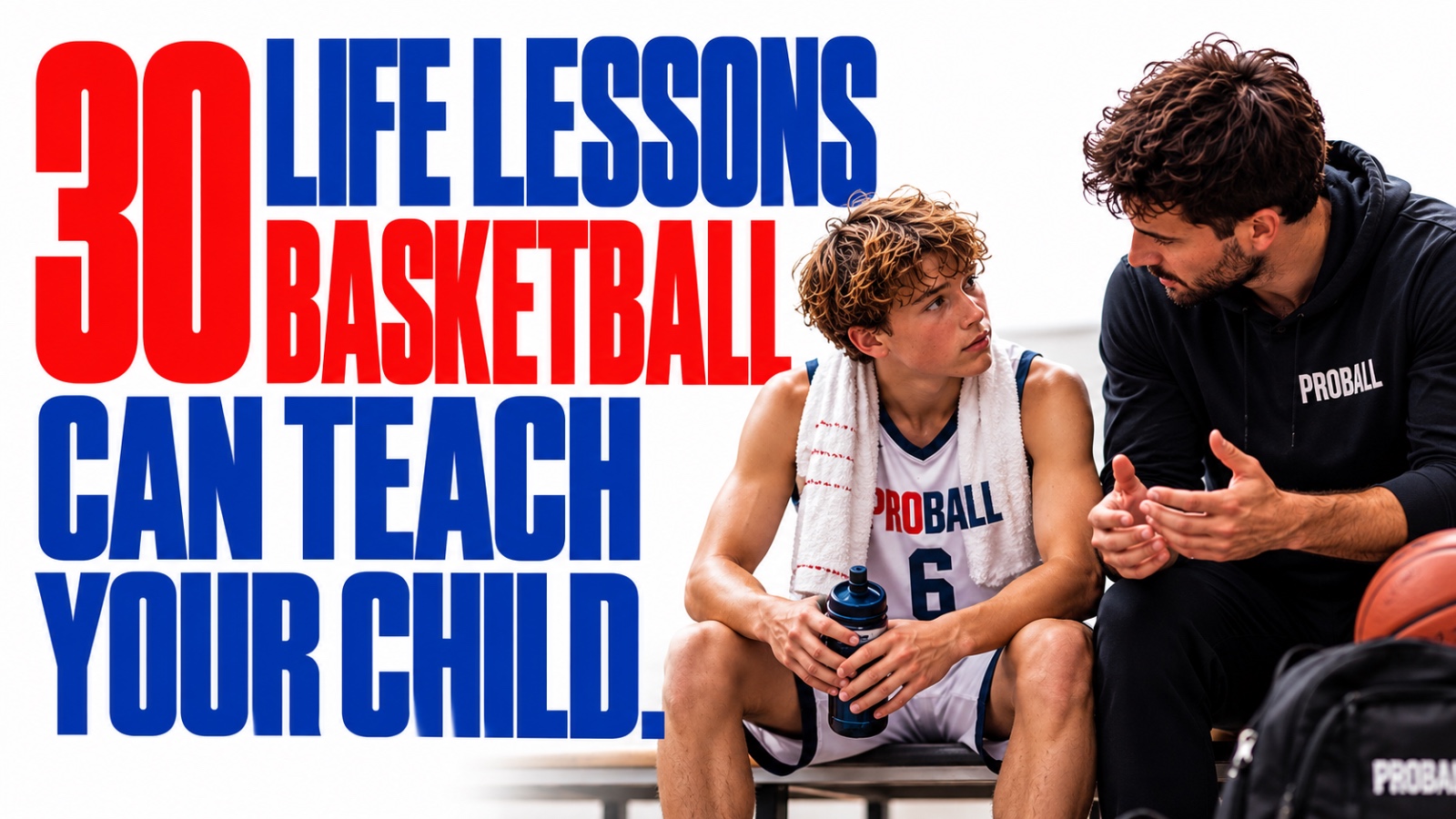
We see a lot of parents sign their children up for basketball because they want them to learn a sport, make friends, stay active and have fun. That’s exactly what junior basketball should offer.
After spending years coaching young athletes, we’ve come to appreciate something else about the game. Some of the most valuable things children learn at basketball training have very little to do with basketball.
A child who learns to apologise after making a mistake is developing something they’ll need for the rest of their life. So is the player who learns to respect a teammate they don’t particularly like, or the one who turns up to training when they’d rather stay home.
These lessons don’t always appear on a scoreboard. Sometimes they don’t become obvious until years later.
At ProBall, we want our athletes to become better basketball players. Of course we do. But we’d also like them to become the kind of people others enjoy working with, playing alongside and having in their lives, and basketball gives us plenty of opportunities to help with that.
Character Comes Before Basketball Ability
You can teach a child to dribble with their left hand. You can help them improve their shooting technique. You can explain defensive positioning until you’re blue in the face. Although what happens when nobody’s watching? That’s where character becomes important.
We want young athletes to understand that keeping their word matters. If they make a commitment to their team, they should try to honour it. We want them to respect everyone, not just the best players or the people who can help them get ahead.
We want them to own their mistakes instead of searching for someone else to blame. Perhaps most importantly, we want them to understand that being a good basketball player doesn’t make them more important than anybody else.
Here are the first eight lessons we’d love every young athlete to learn:
- Keep your word. If you make a commitment, do your best to honour it.
- Respect everyone. Not just the coach, the captain or the best player.
- Own your mistakes. An apology is usually more useful than an excuse.
- Be a good teammate. Especially when things aren’t going your way.
- Stay humble. Being talented doesn’t make you better than other people.
- Tell the truth. Even when honesty feels uncomfortable.
- Treat people fairly. Every teammate deserves respect.
- Do the right thing. Even when nobody’s watching.
None of these lessons requires a child to be particularly talented at basketball. That’s the point.
Learning to Control What You Can
One of the most interesting things about coaching children is watching them gradually become more independent. When they’re younger, parents organise almost everything. They pack the bag, fill the water bottle, remind them about training and make sure their shoes are in the car.
As children grow, basketball gives them opportunities to take responsibility for some of those things themselves. They can learn to arrive prepared, look after their equipment, manage their time and ask for help when they need it. They can also begin to understand that looking after their bodies matters, particularly as training and competition become more demanding.
Of course, we don’t expect a seven-year-old to manage their entire weekly schedule. These lessons need to be age-appropriate. But there’s something valuable about gradually giving children more responsibility rather than doing everything for them.
Lessons 9–16 are about looking after yourself and taking ownership:
- Protect your health. Sleep, food and recovery matter.
- Learn to say no. Not everything deserves your time or attention.
- Value your time. Use it on things that matter to you.
- Build good habits. Small choices eventually become routines.
- Be responsible. Take ownership of your decisions.
- Finish what you start. Unless there’s a good reason to change direction.
- Learn to be independent. Don’t wait for somebody to do everything for you.
- Ask for help. Being independent doesn’t mean doing everything alone.
We particularly like that last one. Sometimes young athletes think asking a question makes them look inexperienced. We’d much rather have a child put their hand up and ask how to improve than pretend they understand something they don’t. This is how learning works.
Basketball Teaches Children How to Handle Difficult Moments
Let's talk about a situation most basketball parents will recognise. Your child makes a mistake. Maybe they miss an easy layup, turn the ball over or forget who they’re supposed to defend. They’re frustrated, the opposition scores, and suddenly they’re looking towards the bench. What happens next REALLY matters.
Do they spend the next three possessions thinking about what went wrong? Do they blame a teammate? Or can they listen to their coach, understand what needs to change and get back into the game? Nobody handles every difficult moment perfectly, especially children. But basketball gives them repeated opportunities to practise responding differently, and this is an extremely valuable because life doesn’t always go according to plan either.
Lessons 17–23 are about handling the difficult stuff:
- Don’t compare your journey. Children develop at different rates.
- Learn from losing. A result can show you what needs work.
- Accept that life isn’t always fair. Focus on what you can influence.
- Don’t let anger make decisions. Give yourself a moment before reacting.
- Be willing to learn. Nobody knows everything.
- Don’t be afraid to be a beginner. Everyone starts somewhere.
- Keep your perspective. One bad day doesn’t define you.
Picture two players who experience exactly the same frustrating game. One spends the drive home blaming the referee, their teammates and the coach. The other is disappointed too, but eventually starts thinking about what they could do better next time. Neither player enjoyed losing.
The difference is what they decide to learn from it. As coaches, we can’t remove every difficult experience from a young athlete’s basketball journey. Nor should we want to. Our job is to help them understand those experiences and develop the skills to handle them.
The People Around You Matter
Basketball is a team sport, which means children spend a lot of time around people with different personalities, abilities and backgrounds.
They won’t always agree with everyone. They won’t always be best friends with every teammate. And sometimes somebody else will receive the recognition or opportunity they wanted for themselves. These are important moments.
Can a child celebrate a teammate who played well, even when they had a difficult game? Can they help someone who’s struggling without expecting something in return? Can they respect another person’s differences?
Those behaviours might not get the biggest cheer from the crowd, but they’re worth teaching.
The final seven lessons are about relationships:
- Choose good friends. Spend time with people who respect you.
- Celebrate others. Somebody else’s success isn’t your failure.
- Learn to forgive. You can move forward while maintaining boundaries.
- Be grateful. Appreciate the opportunities and people around you.
- Respect differences. Not everybody thinks or lives the same way.
- Help without expecting something back. Kindness doesn’t need a reward.
- Remember what matters. Success means more when you have people to share it with.
We see these lessons in small moments all the time. A player helping a teammate off the floor. Someone encouraging the youngest child in the group. A player who didn’t score a point but still celebrates when their team wins. They’re easy moments to overlook if we’re only paying attention to the scoreboard. They MATTER.
What Parents Should Look for in a Basketball Club
When parents are choosing a basketball club in Sydney, it’s understandable that they want to know about the coaches, training sessions, competitions and opportunities available. Those things are important. Although we’d encourage parents to pay attention to something else.
What happens when your child makes a mistake? Are they given feedback they can understand? Are they encouraged to try again? Are they learning how to solve problems, or are they simply being told what they did wrong?
What happens when they succeed? Are they learning to stay humble, recognise their teammates and appreciate the work that helped them improve?
A good basketball environment should challenge children while giving them the guidance and support they need to develop.
That doesn’t mean every training session will be easy. Sometimes a child needs to hear that their defence wasn’t good enough or that they need to concentrate more. But the feedback should help them understand what to do differently.
There’s a big difference between holding a young athlete accountable and making them afraid to make mistakes. We want our players to understand that difference.
One Day, They Might Forget the Score
Let's go back to the sports you played when you were younger. You probably remember a few big wins, some painful losses and maybe a particularly important game. Chances are, you also remember the people. The coach who believed in you. The teammate who became a lifelong friend. The first time you overcame something you thought you couldn’t do.
You might remember being disappointed, learning to work harder or discovering that you were capable of more than you expected. Those experiences can stay with people long after they stop playing.
At ProBall, we want children to enjoy their basketball and develop their skills. We want them to compete, improve and experience everything that makes being part of a team worthwhile.
If they eventually leave our club knowing how to take responsibility, treat people properly, handle disappointment and keep learning, we’ll be pretty happy with that too.
The best thing basketball can give your child isn’t necessarily a trophy. It’s the person they become along the way.
BOOK AN INFO SESSION
At ProBall, we help young athletes develop their basketball skills while learning the value of teamwork, responsibility and consistent improvement. With flexible training opportunities across Sydney, children aged 5–15 can learn, compete and grow in an environment that challenges and supports them. New players can start with 4 weeks of FREE ProBall training.
Book a Free Trial