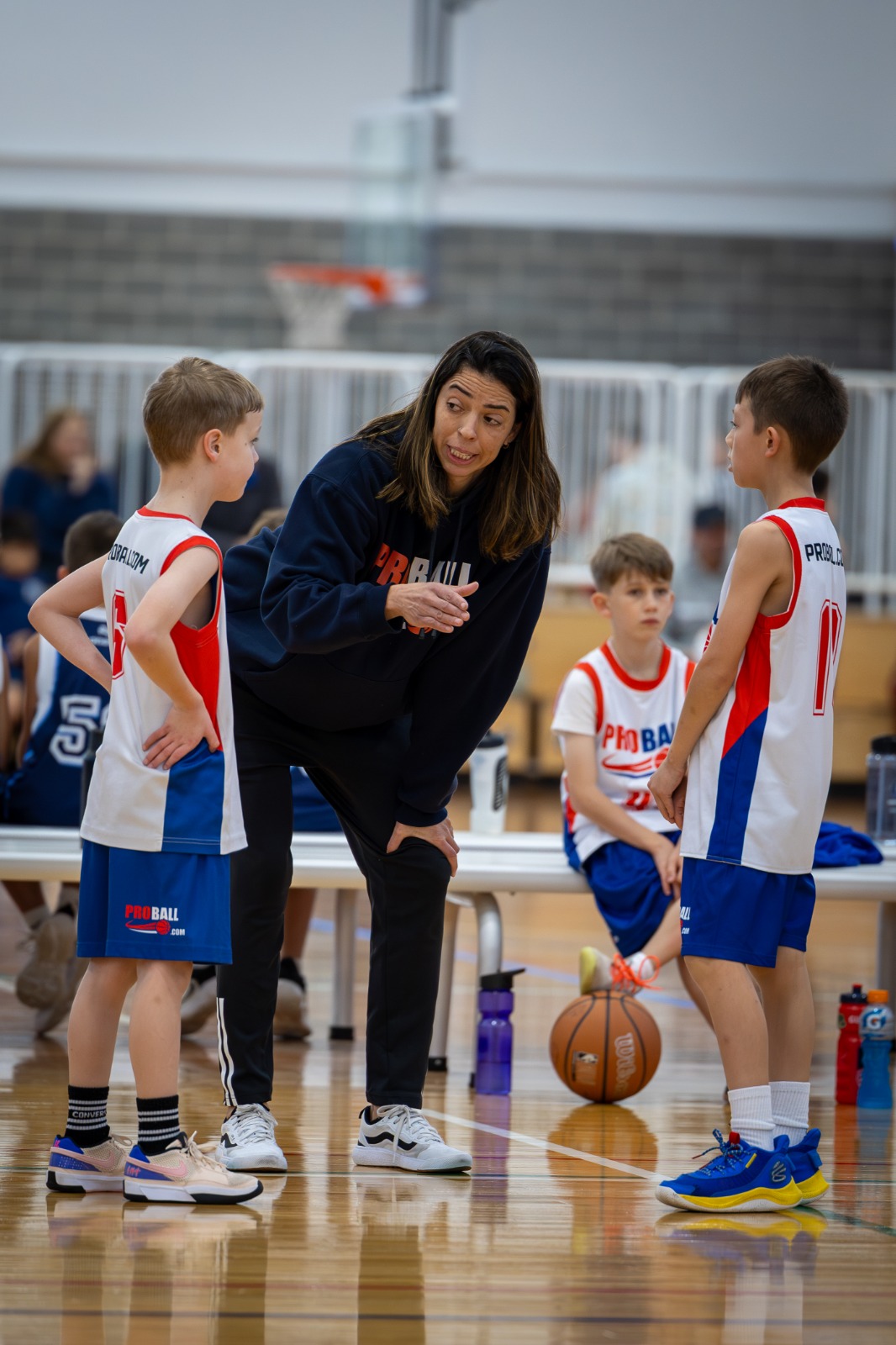
Most parents underestimate how much pre-game messaging shapes their child's performance. The words spoken in the car on the way to the venue, in the carpark, or in those last moments before tip-off carry far more psychological weight than most adults realise.
The pressure that children experience before and during competition doesn't stem primarily from the competition itself. It stems from what they believe the game signifies about them — about their ability, their worth, and whether they will still be loved and accepted regardless of how things go.
Why Performance Pressure Comes from Perception, Not Competition
Young athletes are sensitive readers of the adults around them. They notice tension in a parent's voice. They sense the unspoken expectation behind "I know you'll do great." They register the slight change in mood when a game doesn't go well.
When players perceive — consciously or unconsciously — that their performance determines their parent's happiness, their acceptance in the family, or their standing as an athlete, they carry that weight onto the court with them. And weight is the enemy of free, effective play.
Players who feel conditionally accepted — whose parents' approval rises and falls with the scoreboard — tend to hesitate when they should be decisive. They play conservatively, avoiding risks that might lead to mistakes. They become anxious spectators of their own performance rather than immersed competitors.
Unconditional support, communicated clearly and consistently, changes this. When a young athlete genuinely believes that nothing about the game's outcome will affect how their parents see them or feel about them, they are freed to play with less hesitation and more effectiveness.
10 Phrases That Build Pre-Game Confidence
These are not motivational one-liners. They are genuine expressions of unconditional support that lower the psychological stakes and allow young players to compete freely:
- "You're allowed to make mistakes out there." — This gives explicit permission to be imperfect, which most children desperately need to hear before a competitive game.
- "I don't need this to go well." — One of the most powerful things a parent can say. It removes the burden of managing parental emotions from the child's shoulders.
- "You don't owe anyone a great performance today." — Young athletes often feel they owe coaches, parents, or teammates a certain standard. This phrase releases that obligation.
- "Whatever you are feeling is totally normal." — Pre-game nerves are universal. Normalising them prevents anxiety from compounding into panic.
- "Nothing about today changes who you are." — Identity is not on the line. The game result does not define the person.
- "I'm not nervous. I trust you." — Projecting calm confidence rather than anxious investment changes the emotional environment before a game starts.
- "You don't need to prove anything today." — Removes the performance-as-proof dynamic that drives much of youth sport anxiety.
- "Play like nobody's watching, even me." — This one is particularly powerful. It liberates the child from performing for an audience.
- "If it falls apart, we figure it out together." — Communicates that adversity is shared, not judged. The parent is an ally, not an assessor.
- "I already know who you are — now go remind yourself." — A reminder that the parent's view of their child is fixed, positive, and not dependent on what happens in the next hour.
Understanding What Raises and Lowers Pressure
Not all pressure is bad. A certain amount of positive arousal improves athletic performance. But anxiety — pressure that tips into distress — consistently harms it. Understanding what moves a child toward anxiety and what brings them back toward confident calm is essential for anyone involved in their development.
Pressure Increases When:
- Results feel critical to something beyond the game itself (reputation, parental approval, team selection)
- Errors feel like they carry real consequences — disappointment, criticism, reduced playing time
- A child believes that approval is conditional on how well they perform
Pressure Decreases When:
- Effort is recognised independently of outcome — "I saw how hard you worked out there" matters more than "you played well"
- Mistakes are reframed as learning opportunities rather than failures
- Support is communicated as consistent, unconditional, and not tied to performance
What Real Confidence Actually Looks Like
Real confidence in a young athlete is not bravado. It is not the loudest player in the warm-up, or the one who talks most about what they're going to do. Real confidence is quieter than that. It looks like a player who is genuinely present — focused on the game rather than on being observed, engaged with the competition rather than managing external expectations.
That kind of confidence doesn't come from motivational speeches in the car. It comes from three things:
- Trust — Knowing that the adults around them are in their corner regardless of what happens
- Preparation — Having put in the work in training so that the body and mind know what to do under pressure
- Environment — Being part of a program where mistakes are expected, growth is valued, and development happens through consistent, structured engagement
At ProBall, our approach to coaching focuses on building these three pillars — not just through what we say to players, but through how we structure our sessions, how we respond to mistakes, and how we create an environment where young athletes feel safe enough to take risks, fail, and improve.
Confidence starts at training. And what parents say before game day is one of the most direct ways they can support — or undermine — that confidence in the moments that matter most.
Confidence starts at training.
ProBall creates structured environments where young athletes build real confidence through repetition, clarity, and composure — the foundations that hold up under game-day pressure.
Book a Free Trial