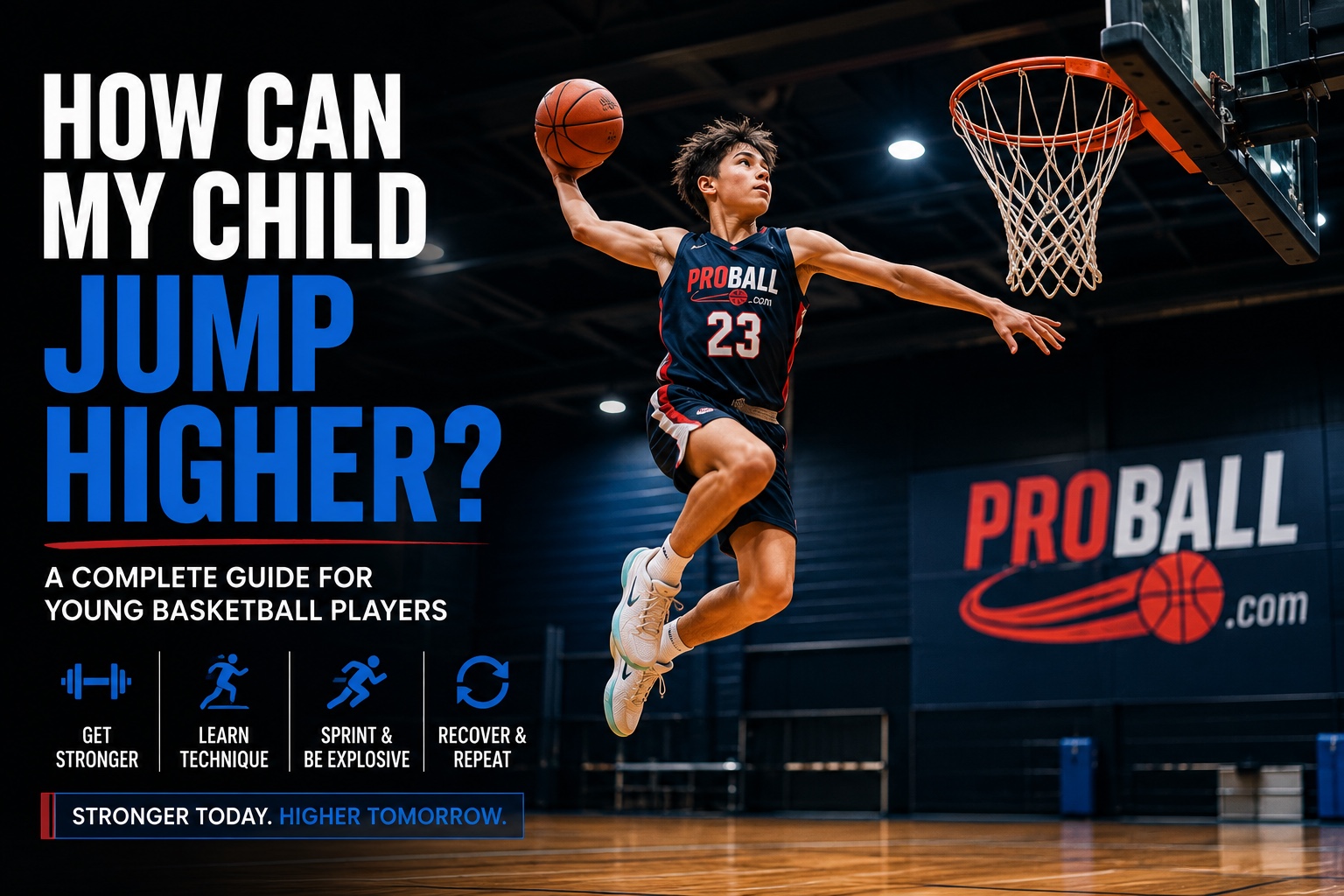
If your child wants to jump higher for basketball, doing hundreds of random jumps probably isn’t the answer. Jumping higher comes from learning how to produce force quickly. That means getting stronger, learning how to move properly, improving coordination and, yes, practising jumping.
For young basketball players though, there’s an important catch. They’re still growing. So the goal shouldn’t be to copy an NBA player’s vertical jump program or load them up with exercises they’re not ready for. The goal is to build athletic foundations that help them become quicker, stronger and more explosive over time. Here’s where we’d start.
1. Get Stronger Before Chasing a Bigger Vertical
Jumping looks explosive. But underneath that explosiveness is strength. When a player jumps, they have a tiny amount of time to push against the floor and propel their body upwards. A stronger athlete can potentially produce more force during that movement.
For younger players, strength development doesn’t need to mean putting a heavy barbell on their back. Exercises such as squats, split squats, lunges, calf raises and controlled single-leg movements can help kids learn how to control and produce force with their own body. Technique comes first. Load comes later.
2. Learn How to Jump Properly
This gets overlooked. Some kids don’t necessarily need stronger legs first. They need to become better at using the strength they already have. Watch young basketball players jump and you’ll see enormous differences. One player coordinates their arms, hips, knees and ankles together. Another barely bends their knees. Another takes five awkward steps before jumping. Another loses balance when they land.
Jumping is a skill. And like shooting or dribbling, technique improves through repetition. Kids should practise different types of jumps including:
- Two-foot jumps
- One-foot jumps
- Approach jumps
- Rebounding jumps
- Lateral jumps
- Quick repeated jumps
Basketball doesn’t ask players to perform the exact same jump every time. Neither should their training.
3. Sprint
Want to help a young athlete become more explosive? Don’t forget about sprinting. Short, fast sprints teach athletes to apply force into the ground quickly. That matters for jumping too. And basketball is full of explosive movements anyway.
A player might sprint in transition, stop, change direction and immediately jump for a rebound. Athletic qualities don’t exist separately. They work together. That’s why developing better overall movement can be more useful for young players than obsessing over one vertical jump number.
4. Don’t Turn Every Session Into Jump Training
More isn’t automatically better. This is especially important with growing athletes. Jumping creates impact. So does basketball.
A child who already trains several times each week, plays games and runs around at school might already be doing hundreds of jumps, accelerations and changes of direction. Adding huge amounts of extra jumping isn’t necessarily going to make them improve faster. Good training needs recovery.
If you’re unsure how much basketball your child should actually be doing, we’ve broken that down in our guide to how often kids should train each week. Quality beats mindless volume.
5. Use Basketball to Develop Explosiveness
Here’s the good news. Kids don’t need every athletic exercise to feel like a workout. Basketball itself creates opportunities to develop jumping ability. Think about: rebounding at the highest point. Exploding into a layup. Jumping off one foot. Jumping off two. Blocking shots. Changing direction. Accelerating into space. Finishing through contact. Those movements expose kids to different athletic problems while they’re actually playing the sport. That’s one reason consistent basketball training matters.
Players aren’t only developing their shooting and ball handling. They’re learning how to move.
We see the same principle with shooting. Players usually improve through quality repetitions over time, not one enormous session. Athletic development works in much the same way.
6. Don’t Compare Your Child’s Jump to Other Kids
This one’s important for parents. Two 12-year-olds can be at completely different stages physically. One might suddenly become taller, stronger and faster. Another might not hit that growth stage for another year or two. That doesn’t mean one kid is more athletic forever. Kids develop at different rates.
If your child isn’t jumping as high as another player right now, don’t panic. Focus on what they can control. Movement. Technique. Strength. Effort. Consistency. Then give their body time to develop.
Does Jumping Higher Actually Make You Better at Basketball?
It can help. But a bigger vertical doesn’t automatically make someone a better basketball player. A player who jumps 10 centimetres higher but doesn’t know where the rebound is going won’t necessarily get more rebounds. A player who can jump out of the gym but can’t stay in front of someone isn’t automatically a great defender.
Basketball rewards athleticism. But it rewards players who know how to use their athleticism even more. Timing matters. Positioning matters. Decision-making matters. Skill matters. That’s why we’d rather develop basketball players who become better athletes than athletes who simply chase testing numbers. Learn why we think defence is so important.
Can Jump Training Help With Basketball Confidence?
Absolutely. There’s something powerful about a young player realising: “I can do something now that I couldn’t do three months ago.” Maybe they’re jumping higher. Maybe they’re faster. Maybe they’re finishing stronger. Maybe they’re finally getting rebounds they used to miss.
Those small pieces of evidence build confidence. And confidence in basketball usually doesn’t appear because someone tells a player to believe in themselves. It comes from experiencing improvement.
The more evidence players collect that they can handle difficult situations, the more willing they become to attack them.
So, How Can My Child Jump Higher?
Keep it simple. Help them become stronger. Teach them how to jump and land properly. Let them sprint. Give them different types of jumps. Keep them playing basketball. And don’t rush the process.
Your child doesn’t need a ridiculous “ADD 20CM TO YOUR VERTICAL IN 30 DAYS” program. They need years of good movement, good coaching, good training and enough recovery for their body to adapt. That’s less exciting.
It’s also much closer to how athletic development actually works. And eventually, you might notice something. That rebound they could never quite reach? They’re grabbing it. That layup where they used to struggle to get off the ground? They’re finishing it. Those improvements rarely happen overnight. They build quietly. One repetition at a time.
Try ProBall Free for 4 Weeks
Want Your Child to Train More Consistently? At ProBall, young players can develop their basketball skills through regular training alongside other kids who genuinely love the game. Players can work on shooting, ball handling, defence, movement and the athletic skills that basketball naturally demands. And you don’t have to commit blindly.
Book a Free Trial