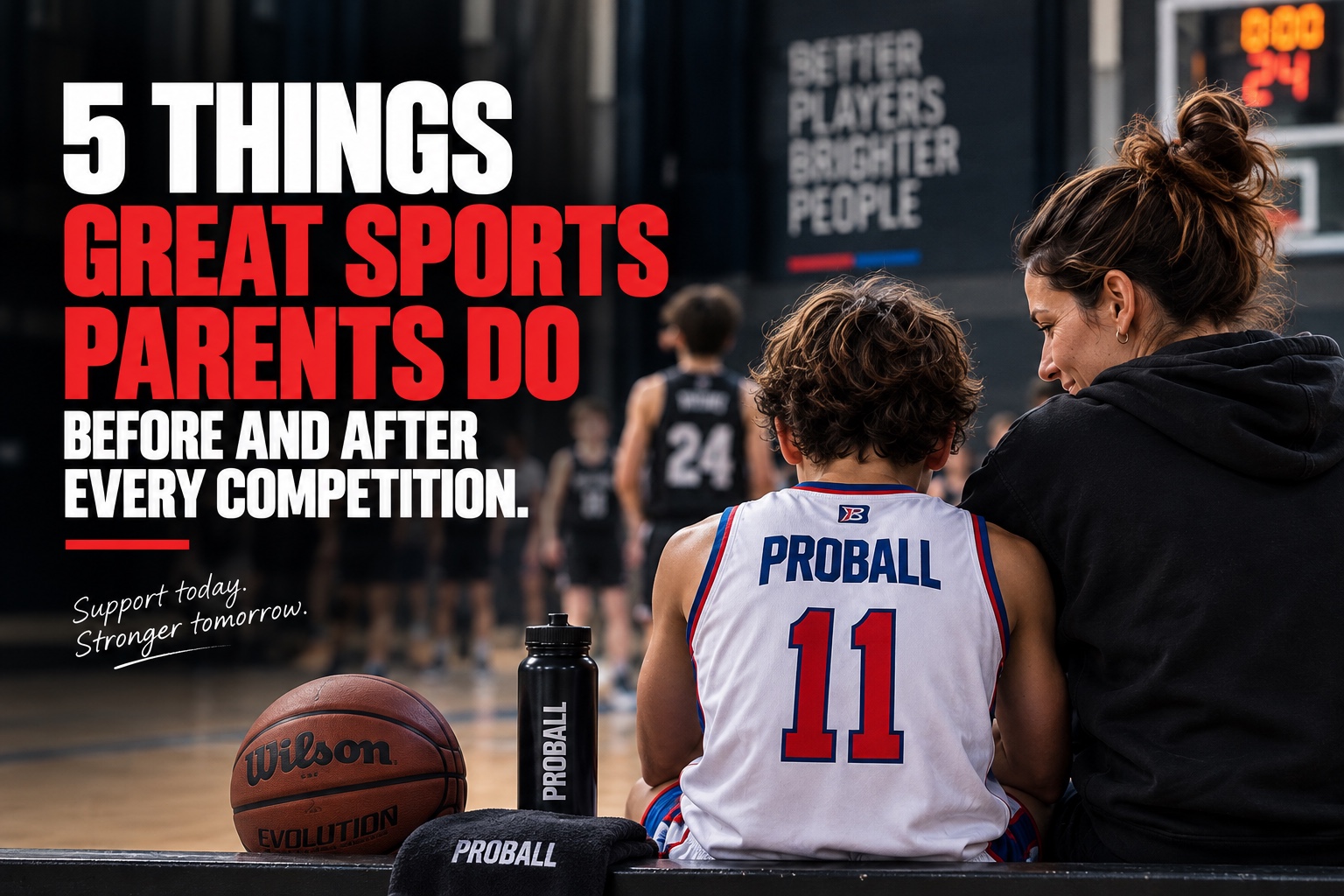
There’s a moment before almost every junior basketball game where parents want to help. Your child might be nervous. They might be quiet in the car. Maybe they’re worried about starting, making mistakes, playing a strong team or disappointing their coach.
So naturally, we start talking. “You’ve got this.” “Remember to be aggressive.” “Make sure you box out.” “Don’t turn the ball over.” “Just relax.” Then the game finishes and we do it all over again...
“What happened on that play?” “You should’ve taken that shot.” “Why didn’t you pass? “Did you hear what your coach was saying?” It all comes from a good place but sometimes the best thing a sports parent can do is coach less and simply be their parent. Your child already has a coach. They don’t need another one sitting next to them in the car.
1. Drop the Pre-Game Pep Talk
Before a game, we often think our child needs one final motivational speech. Most of the time, they don’t. They’ve trained. They know there’s a game. They know you’re watching. They probably already care more about performing well than you realise. Adding another layer of expectations can accidentally make the game feel even bigger.
Instead of trying to hype them up, help them feel calm. You could simply say: “you don’t have to play to make me proud. Go compete, trust your training and enjoy it.” Then leave it there. Sometimes helping less allows young athletes to play more freely.
2. Give Them Permission to Make Mistakes
A young basketball player who’s terrified of making mistakes will eventually stop taking risks. They stop shooting. They pass when they should attack. They hesitate. They look at the bench after every turnover...
Basketball becomes something they’re trying not to mess up rather than something they’re trying to play. Before competition, remind them that perfection isn’t the expectation. Missed shots happen. Turnovers happen. Bad decisions happen. Even great players make them.
What matters is what happens next. “You don’t have to be perfect today. Make the best decision you can and keep playing.” That gives your child something far more useful than confidence. It gives them permission to compete.
3. Let the Emotion Pass Before Talking About the Game
This might be the hardest one. Your child walks off the court after a tough loss. They’re angry. Maybe they’re crying. Maybe they barely played. Maybe they missed the shot they desperately wanted to make. Immediately, we want to make it better.
Although you don’t have to fix every difficult emotion. Sometimes they just need to feel disappointed for a while. You can say: “take your time. We don’t have to talk about it yet.”
Give them a drink. Give them a hug if they want one. Get in the car. There’ll be plenty of time to learn from the game later. The lesson doesn’t disappear because you waited an hour.
4. Ask, Don’t Analyse
The post-game car ride can become an unofficial film session very quickly. Parents replay possessions. Question decisions. Explain what should’ve happened. Talk about the referee. Talk about the coach. Talk about playing time. Meanwhile, the kid who just played 40 minutes wants to stare out the window and think about literally anything else.
Try asking instead.“Did you have fun?” “How did you feel out there?” “Anything you want to talk about?” and if the answer is “no,” that’s okay too.
There’s an important distinction there: the basketball is the coach’s job. The relationship is yours. Your child probably won’t remember your technical breakdown of their third-quarter defensive rotation. They may remember how it felt getting into the car after a terrible game.
5. Make Sure Your Love Never Moves With the Scoreboard
This is the big one. Kids notice more than we think. They notice when we’re happier after they score 20. They notice when the drive home feels different after a loss. They notice our body language in the stands. They notice when we talk excitedly about basketball after a great performance but barely say anything after a bad one.
Young athletes need to know that one thing remains completely untouched by the scoreboard: their relationship with you. Win or lose. Starter or bench. Great game or terrible game. Made the team or got cut.
“I’m proud of you. Always.” That doesn’t mean lowering standards. It doesn’t mean pretending effort doesn’t matter or telling kids every performance was brilliant. You can still expect discipline, commitment, respect and hard work. It simply means those things don’t determine whether your child feels loved.
They Won’t Always Be Playing Basketball
Eventually, the difficult thing won’t be a missed shot. It’ll be school. Work. Relationships. Rejection. Failure. Life...
Sport gives kids a relatively safe place to experience disappointment while the adults who love them are still nearby. That’s one of its greatest gifts.
We shouldn’t try to remove every hard moment. We should help young athletes discover: “that hurt. I didn’t get what I wanted. I made mistakes. And I’m still okay.”
The goal was never to raise an athlete who wins everything. It was to help raise a young person who knows they can handle whatever comes next.
Help Your Child Grow Through Basketball
Give your child a place to compete, make mistakes, build confidence and keep growing. At ProBall, we use basketball to develop better players and stronger, more resilient young people.
Book a Free Trial